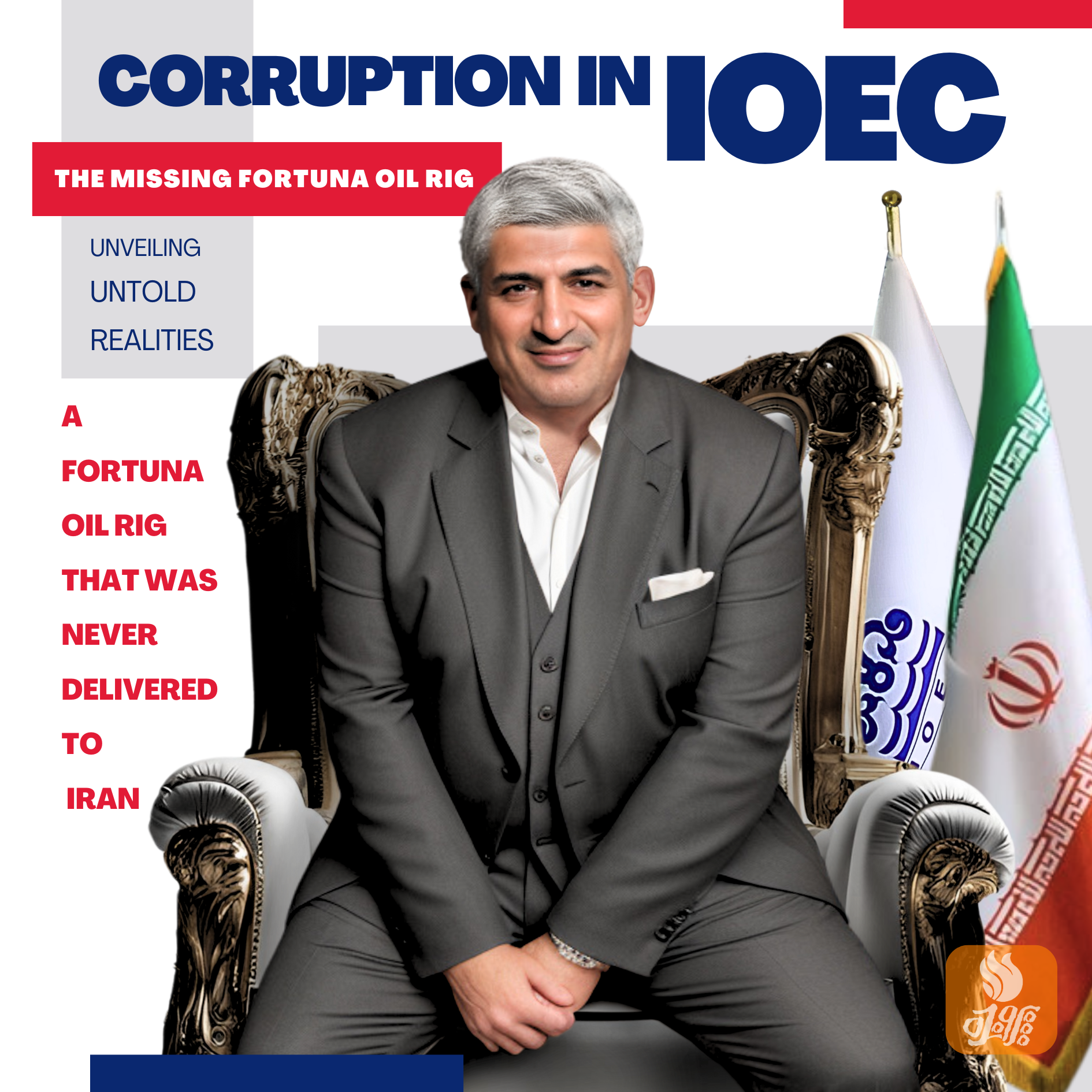
Corruption in the IOEC, The Missing Fortuna Oil Rig
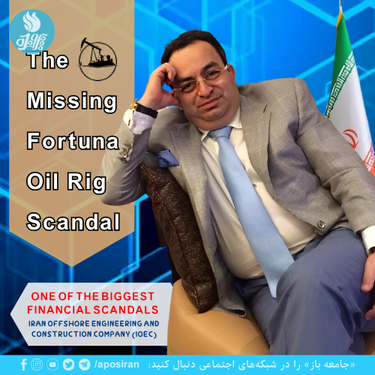
One of the most notorious corruption scandals in the Iranian Offshore Engineering and Construction Company (IOEC) centers on the Fortuna oil rig—a case that came to symbolize systemic mismanagement and fraud under the leadership of Ali Taheri-Motlaq, who helmed the company between 2010 and 2013.
During this period, IOEC presumably entered into a contract with Sepanta International to purchase the oil rig. The total transaction amount for the Fortuna oil rig was approximately $87 million. This sum, paid in three installments: $17.4 million on April 25, 2012, $40 million on October 5, 2012, and $29 million on November 24, 2012. Owing to its Iranian connections, however, Sepanta was subject to international sanctions.
Despite this, the Fortuna oil rig was never delivered to Iran. and Bijan Namdar-Zanganeh, the minister of oil in the administration of Hasan Rouhani, officially confirmed that no such rig ever entered Iranian waters in the Persian Gulf. Remarkably, despite the rig’s absence, IOEC’s CEO at the time, Ali Taheri-Motlaq, signed documents falsely confirming its receipt.
Corruption and Rent-Seeking among IOEC’s Managers
Ali Taheri-Motlaq, as the then CEO of IOEC, is identified as the buyer of the rig. One of the charges against Ali Taheri-Motlaq is that he received a 300-million-tuman “consultancy fee” from Rahnemun-e Eqtesad, a construction firm owned by MohammadSaeed Hajighaffari.
As CEO of IOEC and a consultant for Rahnemun-e Eqtesad, Taheri-Motlaq facilitated the firm’s acquisition of an IOEC contract through his influence.
Aqamorad Shirani-Takabi, a shareholder in Sepanta who was a consultant to the CEO of IOEC at that time, is among the influential figures involved in pursuing the signing of the Fortuna rig purchase contract.
The amount paid for the rig was at least $22 million higher than its actual value. In this context, Mohammadreza Iravani, the chairman of the board of Dana Energy Company said that the Fortuna rig was also proposed to this company for purchase at a price between $60 and $65 million.
This raises further suspicion that the primary purpose of drafting and executing the contract was not to acquire the necessary oil rig for IOEC. Instead, it seems the true objective was to misappropriate $87 million from the state treasury under the guise of circumventing sanctions.
The trial about the missing rig
Two trials were conducted in the case of the missing Fortuna oil rig, one in a UK court and another in Iran. The Supreme Court of England and Wales sentenced the three main defendants to collectively pay amounts in three different currencies for a total approximately equivalent to the sum of 79 million AED, or €60 million. In Iran the court sentenced the lead defendant, Ali Taheri-Motlaq as the former CEO of IOEC, to three years in prison for breach of trust. The other defendants were also sentenced to prison and fines.
This case is not an isolated incident; similar scandals have marred Iran’s oil and gas industry, including the high-profile corruption involving Babak Zanjani, who was accused of embezzling billions from oil sales meant to bypass international sanctions, further highlighting the endemic mismanagement and malfeasance within the sector.
Systematic Corruption in Iran’s Oil and Gas Industry
The findings of this investigation expose a deep-rooted culture of corruption and rent-seeking within Iran’s oil and gas sector—a critical industry that underpins the nation’s strategic priorities and serves as a key pillar of its economy.
The involvement of the Iranian Offshore Engineering and Construction Company underscores the extensive nature of corruption in the Islamic Republic.
Second, the scale of corruption revealed in these cases is substantial. However, evidence suggests that the actual extent of corruption in Iran’s oil and gas industry far exceeds these reported figures. A thorough and transparent judicial investigation into these activities has yet to occur, largely because many of these corrupt practices were justified as measures to “circumvent sanctions” and were conducted with the awareness of key authorities in the Islamic Republic.
It is essential to highlight these findings to raise awareness about corrupt practices. For example, individuals holding roles in both public and private sectors simultaneously may create opportunities for kleptocratic networks. Furthermore, a lack of transparency in contract awarding through fair and open tenders can encourage corrupt collaborations between public and private entities. This is especially concerning in critical industries, where such practices enable personal gain and raise ethical concerns about managerial behavior. Exposing these issues is vital to understanding the risks and challenges posed by flawed public sector processes that foster such misconduct.
To read the whole dossier of IOEC, download this file: