Ongoing Protests of Iranian Women and Global Indifference
🔹Since the earliest protests against Islamic laws following Iran’s 1979 revolution, opposition to compulsory hijab has been visibly and repeatedly demonstrated. Each time, the international response, whether from human rights organizations or foreign governments, has been minimal and largely ineffectual.
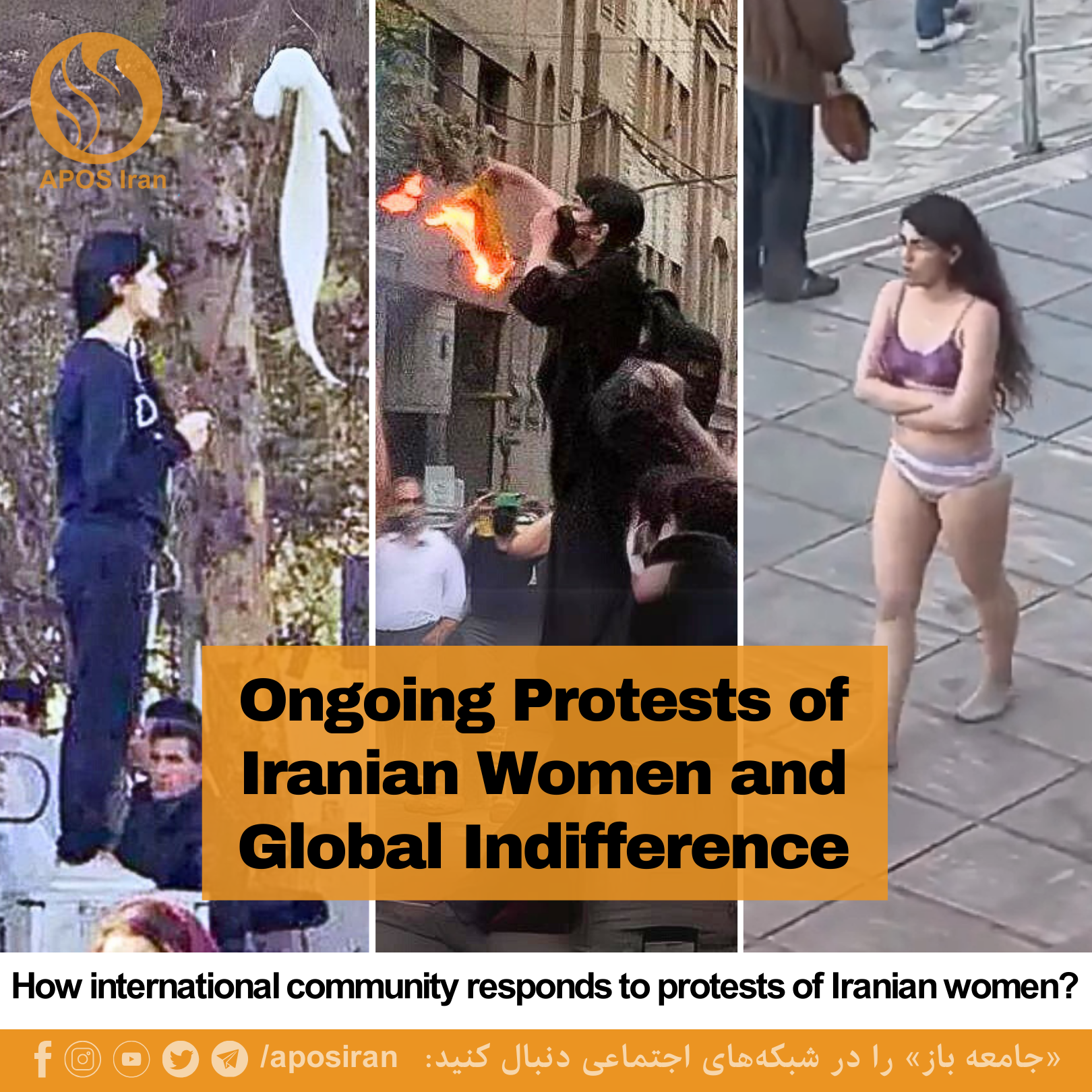
🔺Recall Vida Movahed’s bold stance in December 2017 when she tied her scarf to a stick, waving it like a flag atop a platform at the intersection of Enghelab and Vesal Streets. Her protest against compulsory hijab sparked a wave of similar acts from other courageous women and girls who, following her lead, voiced their dissent against mandatory hijab and faced mass arrests and harsh treatment. In response, Amnesty International, Human Rights Watch, the U.S. State Department, and the European Parliament issued no more than a handful of condemnations and warnings. Rather than taking concrete action, these institutions and states have repeatedly limited themselves to expressions of concern and token gestures.
🔸 Over the years, Iranians have continued to protest against various social and political injustices, from discriminatory Islamic laws to compulsory dress codes, unjust executions, environmental degradation, economic hardship, and the erosion of their cultural heritage. During this time, thousands of women have joined street protests, burning their scarves as symbols of defiance in the Woman, Life, Freedom movement. Numerous female athletes and actresses have publicly removed their hijabs, only to face arrest and an uncertain fate. While Amnesty International and Human Rights Watch have repeatedly denounced human rights abuses and called for concrete action, their efforts rarely extend beyond issuing critical statements. Global reactions remain limited to news coverage, token condemnations, or symbolic acts, such as cutting hair in solidarity.
A Recent Case: The Student at Tehran’s prestigious Islamic Azad University
🔺The latest in recent protests against mandatory hijab involves a young woman at the Islamic Azad University of Tehran, Science and Research Branch, who, standing with her head held high and dressed only in her undergarments, walked boldly across the university grounds among students, security, and regime forces. Ahoo Daryaei, a determined young student who undoubtedly earned her place as a doctoral student, decided to protest by partially disrobing. In this supposed environment of learning, security forces tried to detain her by force, but she resisted courageously. When the officers forcibly removed her hoodie, Daryaei went even further, taking off her pants and shoes as a striking act of protest against the state’s coercive power.
In the clash with the regime’s agents, when they forcibly removed her hoodie, Ahoo, in protest, also took off her pants and shoes.
🔸Each of these events and acts of defiance reveals the immense courage of Persian women and, at the same time, starkly contrasts with the global community’s inaction toward such bravery. Today, the pressing question remains: Will the global community go beyond hollow condemnations, or will it continue with empty warnings and mere spectatorship?