
International Community's Awareness of Tiandy's Role
- Categories
- Dossier
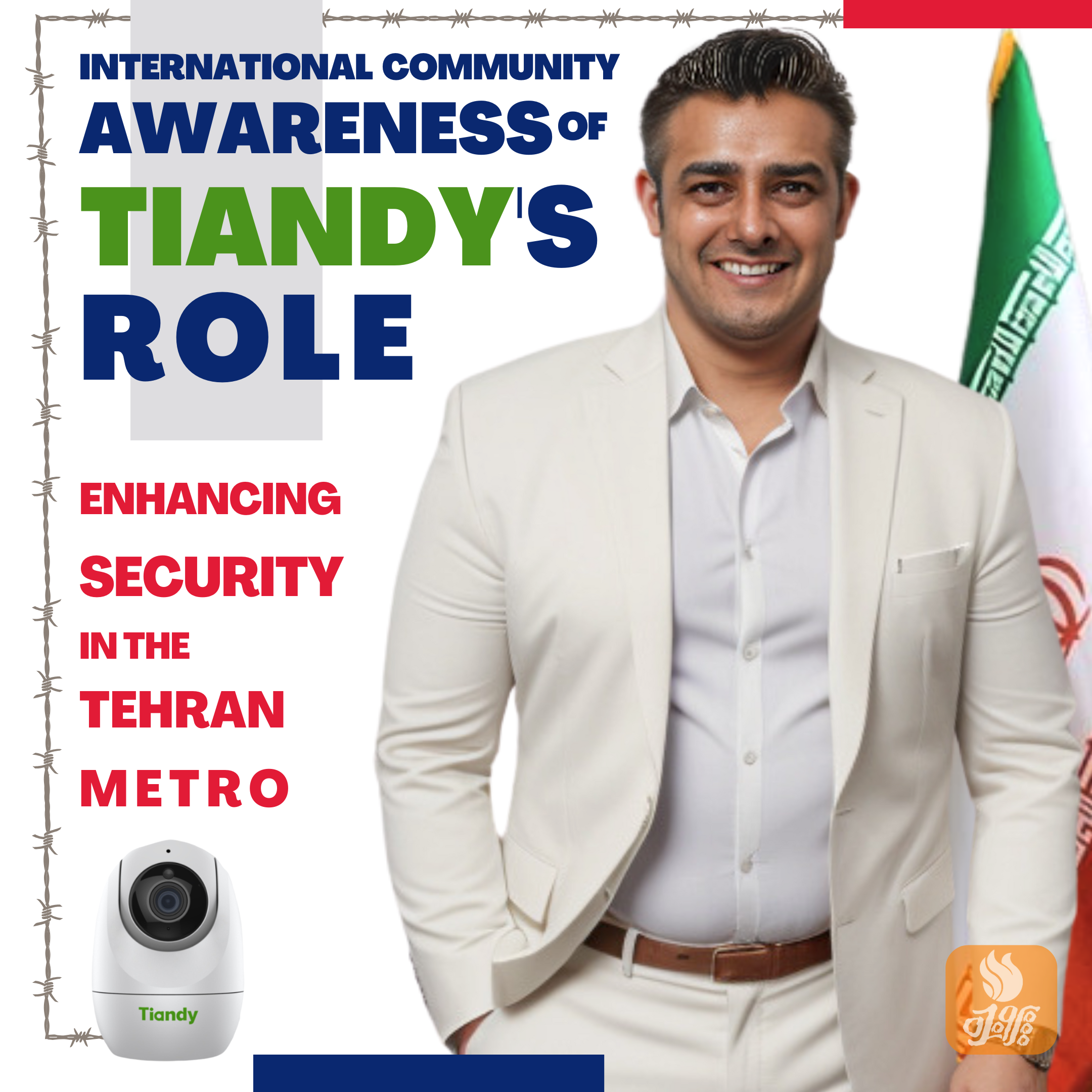
International Community's Awareness of Tiandy's Role
There is significant evidence that the Islamic Republic, particularly its security agencies, has intensified cooperation with Tiandy and increased the use of its products, a trend that continues. This shift appears to be driven by the authorities' recognition of their declining legitimacy among the public, prompting them to prepare for potential new waves of anti-government protests through the deployment of Tiandy surveillance cameras.
Security Officials Acknowledge Use of Cameras in Crackdowns
A leaked "Highly Confidential" document reveals that the Thar-Allah Headquarters of the Islamic Revolutionary Guard Corps (IRGC), a key entity in suppressing anti-government protests, has requested the Iranian government to pay its debt for the installation of "Facial Recognition Security" cameras in the Tehran metro. In a letter dated February 14, 2023, Hossein Najat, the deputy commander of the Thar-Allah Base, urged the government to focus on enhancing security in the Tehran metro to prevent any "anti-security incidents." He noted that the "obsolescence and low quality of the monitoring system and closed-circuit cameras in the Tehran metro" had diminished their effectiveness in addressing recent disturbances in the capital.
Government-affiliated media, especially those close to the Islamic Revolutionary Guard Corps (IRGC), have extensively reported on the use of surveillance cameras to identify protesters and those opposing the mandatory hijab. On January 3, 2018, Tasnim News Agency, which is affiliated with the IRGC, published a series of images showing protesters captured by traffic cameras in front of the University of Tehran.
At the end of September 2022, during the height of the violent crackdown on the "Women, Life, Freedom" movement, Hassan Karami, the commander of the Islamic Republic of Iran's Special Police Unit, revealed that his forces were utilizing various types of cameras and drones to identify protesters and coordinate the actions of suppression forces.
Sanctions Against Tiandy
The growing evidence of systematic human rights violations through surveillance technology has triggered international responses, particularly from Western governments concerned about its proliferation.
In December 2022, the United States government took action by imposing sanctions on the Chinese company for selling surveillance cameras to the Islamic Revolutionary Guard Corps (IRGC) and its involvement in the repression of Uyghur Muslims in China. The impact extended to business relationships - Intel, which had been supplying processors for Tiandy's video systems, removed the company from its business partner list even before the sanctions were announced.
Senator Marco Rubio had previously expressed concerns to President Biden about Tiandy’s business dealings with Iranian officials and its involvement in suppressing protests in Iran. The U.S. Treasury Department also reported the use of Chinese facial recognition technology in Iran, particularly by the IRGC's Hazrat-e Abbas unit in Ardabil province.
In February 2023, the European Union sanctioned Radis Vira Tejarat Company and its manager for violating human rights by selling Tiandy’s surveillance equipment to entities such as the IRGC and Basij. The EU also added Abbas Azarpendar, Tiandy's regional manager in Iran, and the CEO of Radis Vira Tejarat Company to its sanctions list due to their roles in suppressing protests related to the "Women, Life, Freedom" movement.
Conclusion
The Chinese company Tiandy continues to operate on a significant scale, reportedly expanding its operations and product sales. This suggests insufficient international unity among the international community and public opinion against this company and its services to authoritarian regimes like those in Iran and China. Consequently, it is imperative to conduct further research and investigation into the extent and nature of Tiandy's collaboration with security agencies such as the IRGC.
Related posts
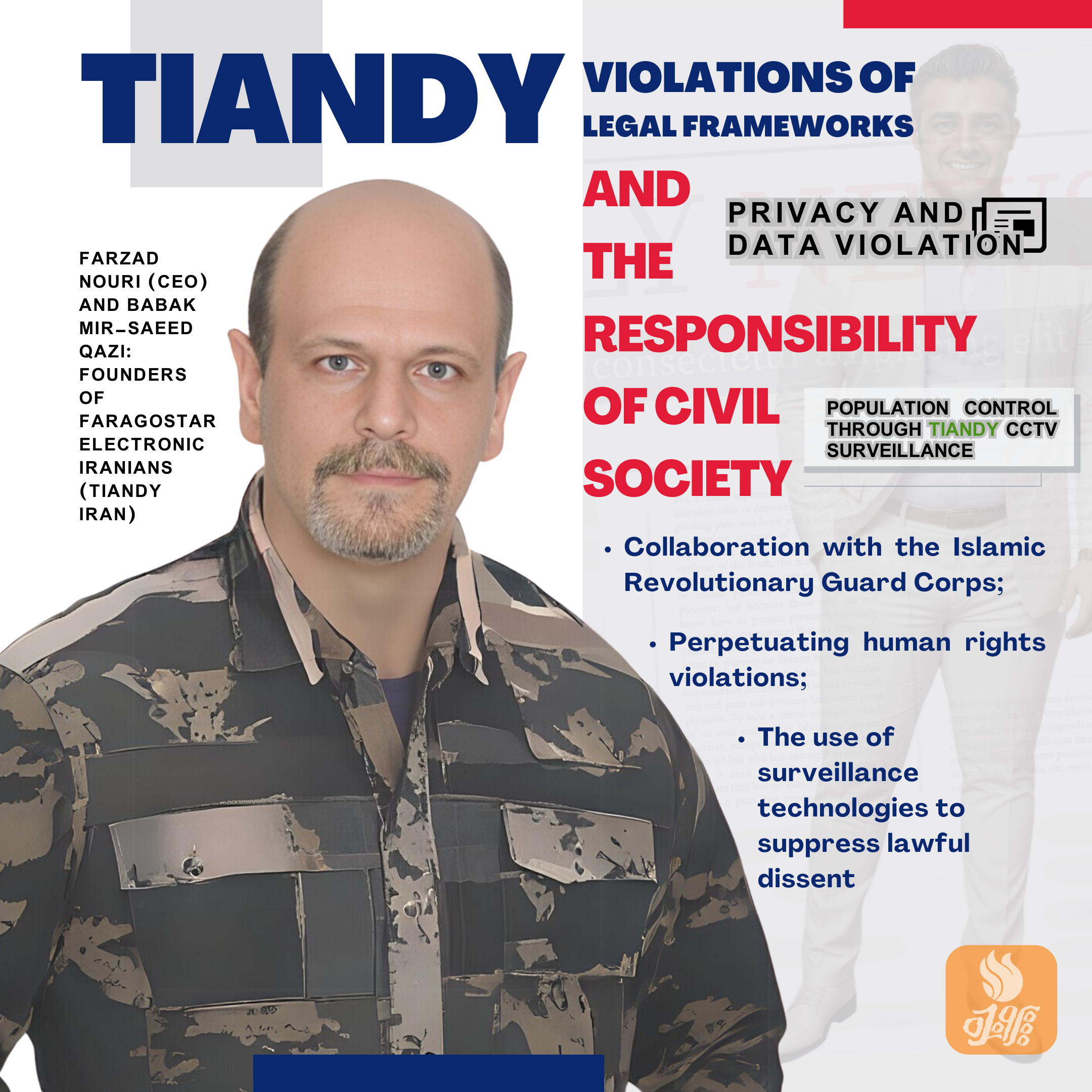
Tiandy, Violations of Legal Frameworks
Tiandy, Violations of Legal Frameworks and the Responsibility of Civil Society Tiandy's collaboration with Islamic Revolutionary Guard Corps (IRGC), a key entity in Iran's…
Continue reading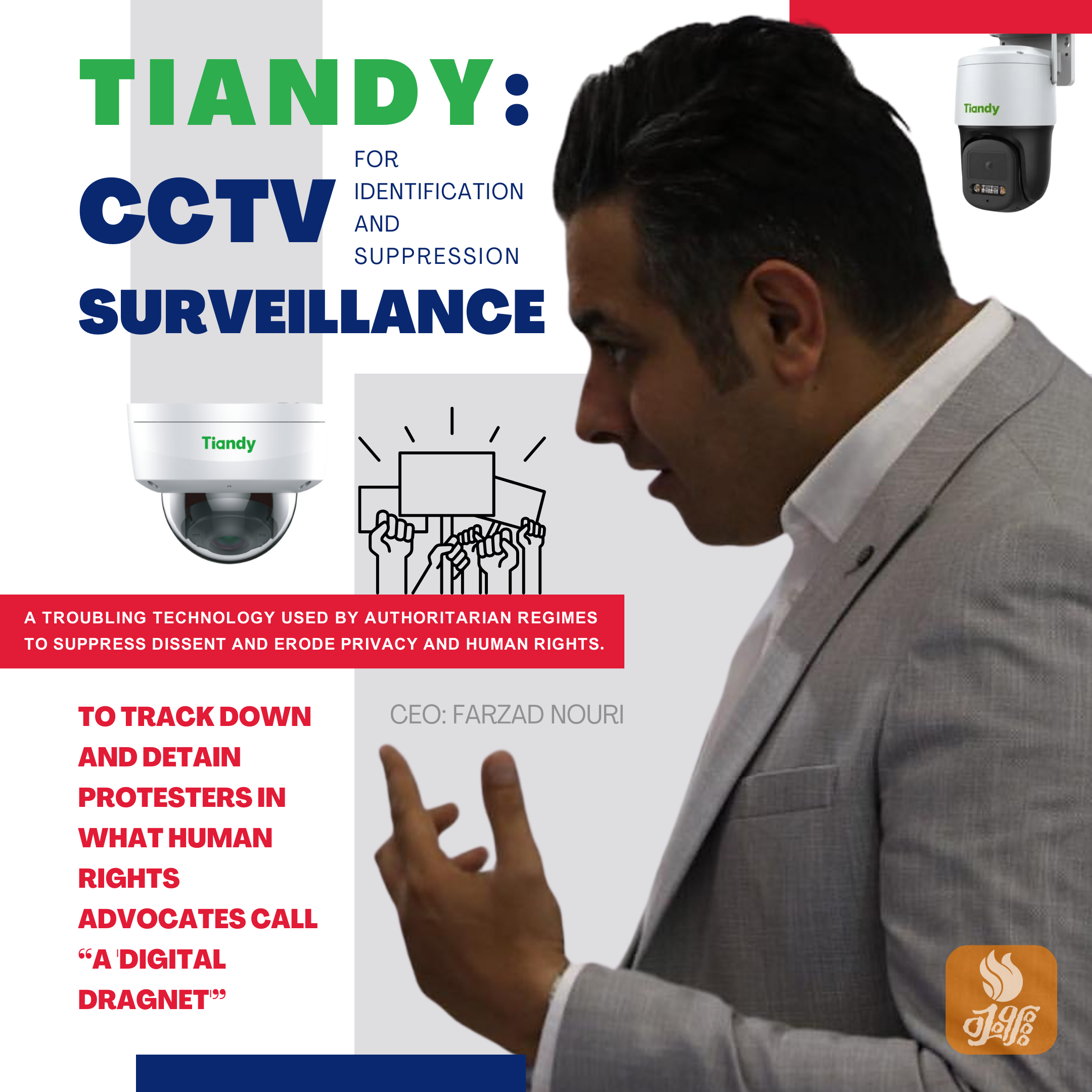
Tiandy: Use of Surveillance for Identification and Suppression
Tiandy: Use of Surveillance for Identification and Suppression Behind Iran's intensifying crackdown on dissent lies a web of Chinese surveillance cameras, supplied by tech giant…
Continue reading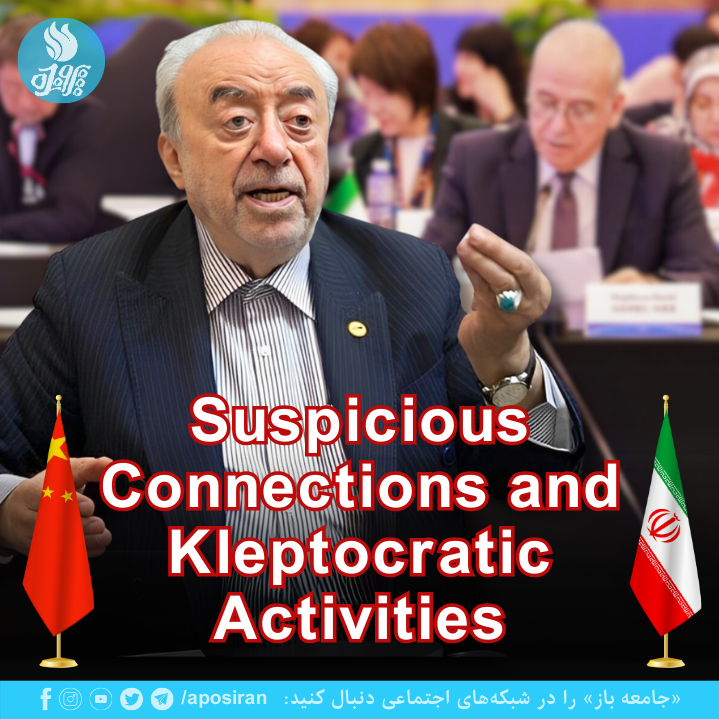
Suspicious Connections and Kleptocratic Activities
Suspicious Connections and Kleptocratic Activities One of the key founders of the Iran-China Chamber of Commerce was Asadollah Asgaroladi, a prominent and influential businessman…
Continue reading