
Tiandy, Violations of Legal Frameworks
- Categories
- Dossier
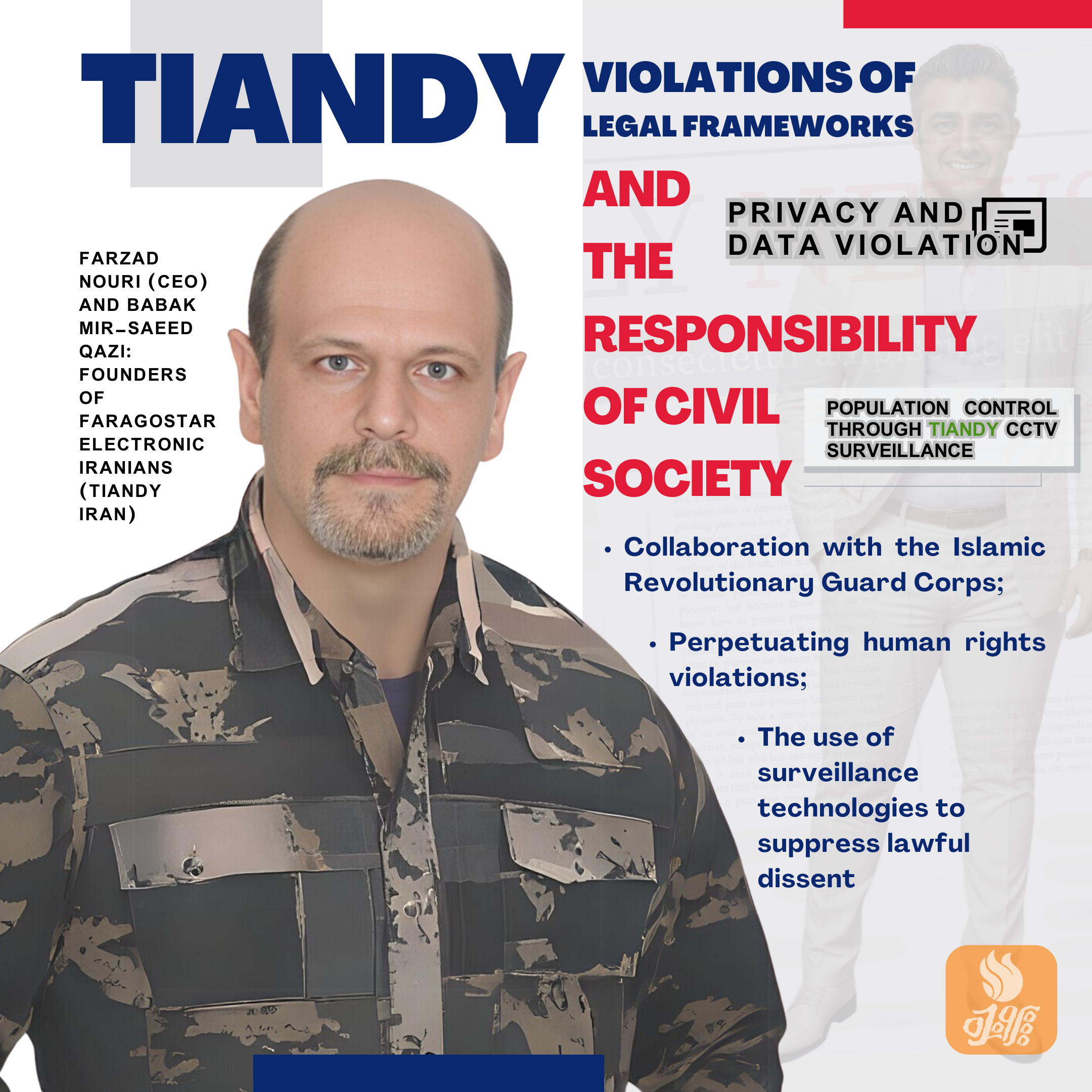
Tiandy, Violations of Legal Frameworks and the Responsibility of Civil Society
Tiandy's collaboration with Islamic Revolutionary Guard Corps (IRGC), a key entity in Iran's security and military sectors, and its provision of surveillance equipment highlight a troubling nexus between private enterprises and state mechanisms of oppression. This intersection raises urgent questions about the role of corporations in enabling and perpetuating human rights violations, necessitating a serious and informed global debate.
Violations of Existing Legal Codes
The use of surveillance technologies to suppress lawful dissent and enforce compulsory hijab laws, in the absence of clear legal frameworks for privacy and data protection, likely constitutes a grave violation of international human rights laws. These violations undermine fundamental rights, including privacy, freedom of expression, and the right to peaceful assembly.
This practice breaches key human rights protected by the UDHR and ICCPR, including the rights to privacy (Article 17), freedom of expression (Article 19), and peaceful assembly (Article 21), highlighting Iran's violation of its international obligations.
The use of surveillance technologies to enforce social norms, like compulsory hijab, and suppress dissent represents state overreach into personal freedoms, conflicting with cultural values of privacy, autonomy, and community solidarity cherished by many in Iranian society.
The Iranian government's collaboration with Tiandy in utilizing surveillance technologies for political repression underscores a pattern aimed at controlling the population and stifling dissent. This not only affects individuals directly targeted but also has broader consequences for civil liberties and human rights in Iran. The financial gains from these activities likely sustain and expand the state's surveillance and security apparatus, further strengthening the influence of the IRGC and other security forces.
A long chain of companies supporting the repressive institutions
Tiandy is not the only one assisting the Islamic Republic in its suppression efforts. Below is a list of other companies and institutions involved in this regard. By investigating the relationships among these entities and analyzing their financial exchange systems, we can begin to uncover the financial and business networks that support their operations.
Companies supplying monitoring and identification equipment include Radis Vera Trade Co., Pars Communication Company, Faragostar Persia Electronics Co, Persia System Company, Sepehr Sanat Company, Rayan Datis Campaign Company, Afradid Irsa Company, Iran Nutrica, Sahba Horizon Company and Basir Electro Robot Co.
Additionally suppliers of suppression equipment include JINO Motors Co., Ltd, Dalian Eagle Sky, Iran-Hatsan Airguns, Akar Arms Manufacturing Company, Fox Armour Co., Ltd, Imen Sanat Zaman Fara Company, Entebagh Gostar Company, Naji Pass Company, ZTE Company as well as Hikvision Company.
This extensive network demonstrates the systemic nature of repression, emphasizing the need to address the use of technology in authoritarian abuses beyond Tiandy’s operations.
Importance and application for civil activists
The insights gained from examining Tiandy's surveillance technologies and their role in identifying and suppressing dissidents in Iran are invaluable to a broad range of activists and civil society organizations.
Human rights advocates and legal aid organizations can leverage this information to document abuses and push for reforms that strengthen privacy and freedom of speech protections. International human rights NGOs operating on a global scale could highlight the human rights violations facilitated by technology in Iran, raising awareness within the international community about the dire situation, especially for women, in the country. These groups can also work to highlight the harms caused by authoritarian governments' use of technology to violate privacy and suppress citizens' social freedoms. The aim of such efforts is to prevent further collaboration between major companies and authoritarian regimes in the realm of human rights abuses and repression.
The concern grows as Tiandy reportedly expands its product offerings, potentially providing even more tools for repression. For instance, Tiandy also manufactures interrogation chairs, commonly known as 'tiger chairs,' which have been widely reported as tools for torturing and extracting forced confessions from prisoners and protesters. Amnesty International documented the use of a similar chair in Iran in its report on the November 2019 protests.
Weaponized Technology
The Islamic Republic's use of Tiandy products to identify and detain protesters and dissidents over the compulsory hijab is a stark reminder of how technology can be weaponized for tyranny. While the misuse of technology by authoritarian regimes is not new, it is crucial in today's world for the international community and public opinion to establish clear red lines and refrain from cooperating with companies that directly or indirectly contribute to repression and human rights violations.
Related posts
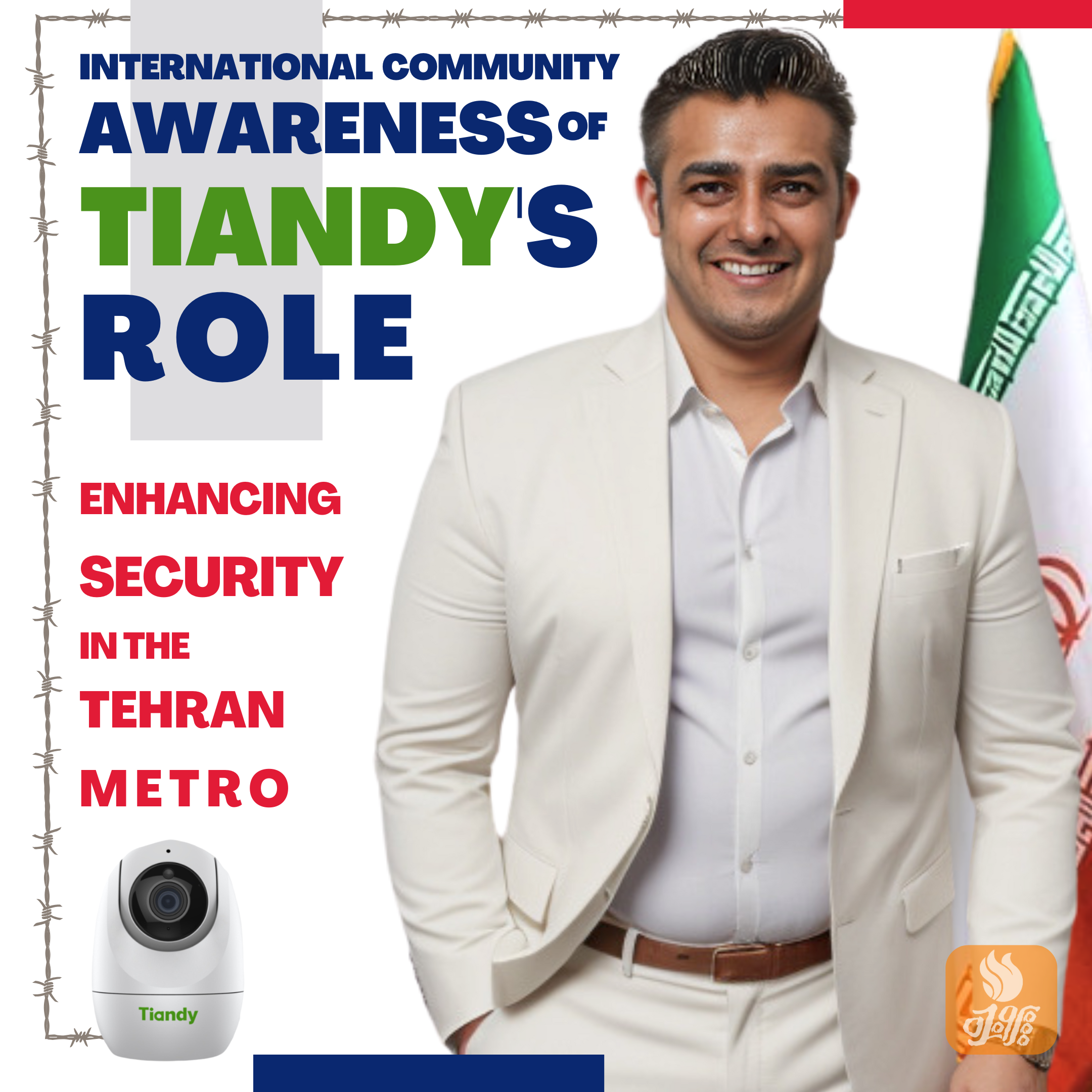
International Community's Awareness of Tiandy's Role
International Community's Awareness of Tiandy's Role There is significant evidence that the Islamic Republic, particularly its security agencies, has intensified cooperation with…
Continue reading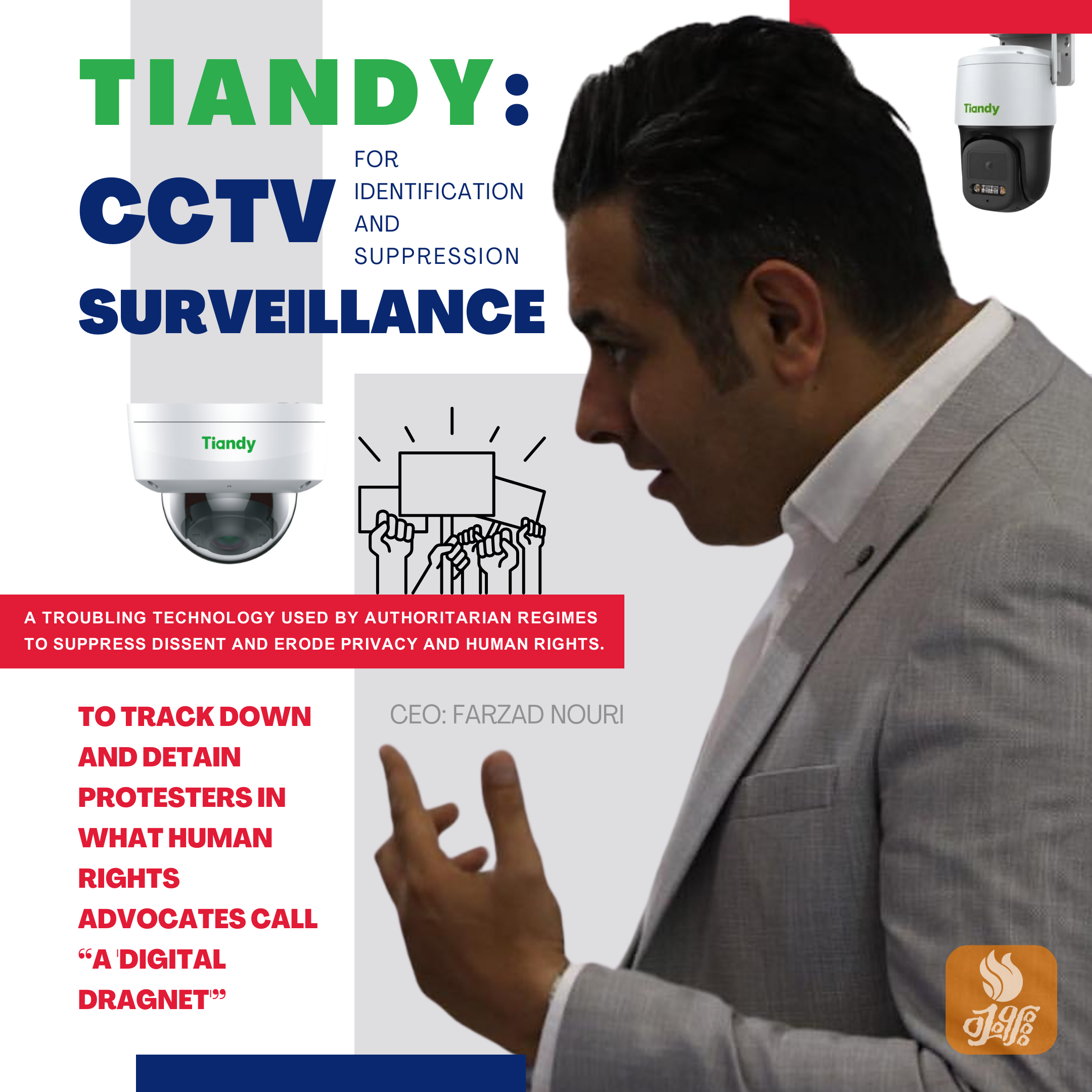
Tiandy: Use of Surveillance for Identification and Suppression
Tiandy: Use of Surveillance for Identification and Suppression Behind Iran's intensifying crackdown on dissent lies a web of Chinese surveillance cameras, supplied by tech giant…
Continue reading
Suspicious Connections and Kleptocratic Activities
Suspicious Connections and Kleptocratic Activities One of the key founders of the Iran-China Chamber of Commerce was Asadollah Asgaroladi, a prominent and influential businessman…
Continue reading