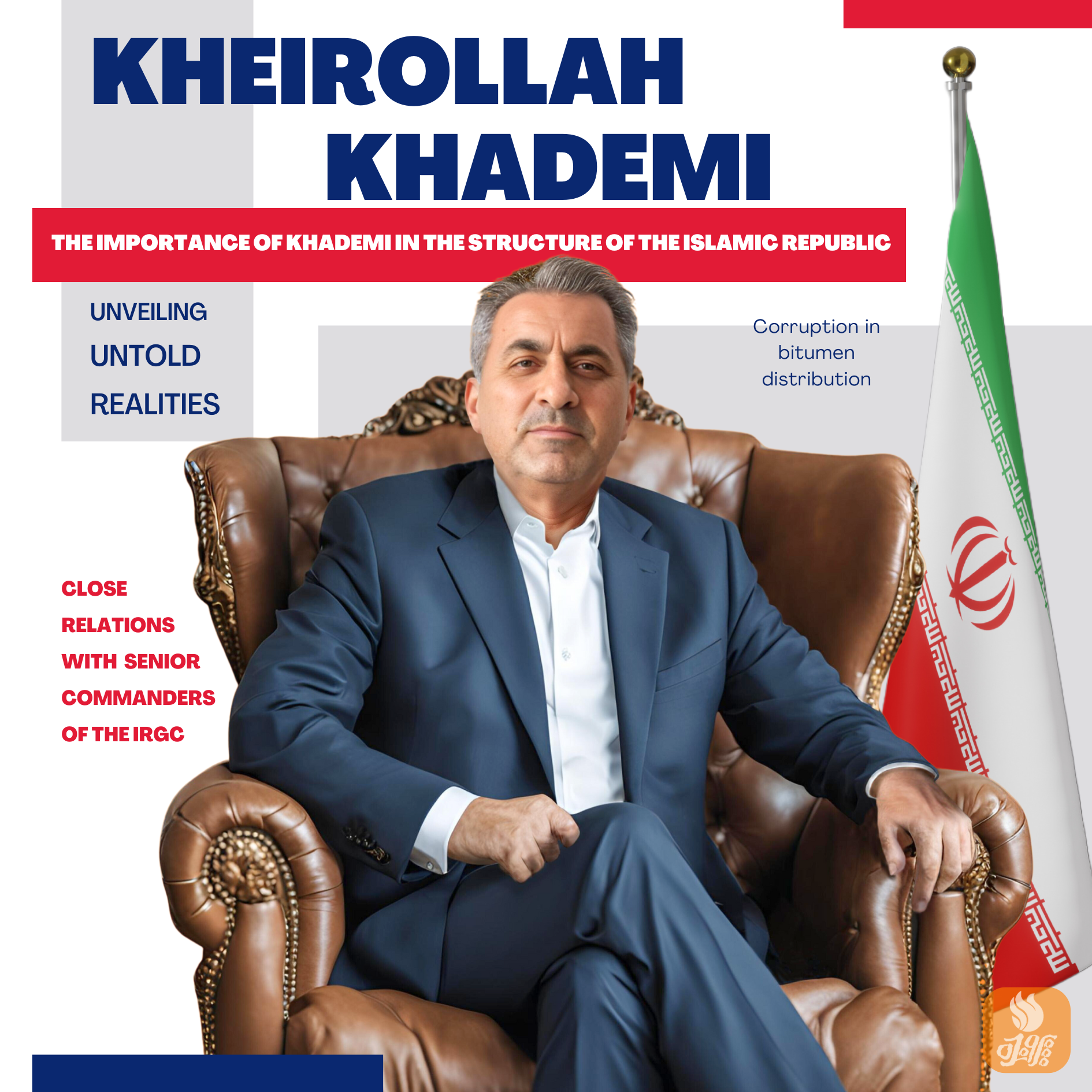
The Importance of Kheirollah Khademi in the Structure of the Islamic Republic
(the fourth dossier)
Within the highly guarded hierarchy of Iran’s theocracy, the pervasive presence of the Islamic Revolutionary Guard Corps (IRGC) is felt across almost all sociopolitical and economic spheres. The IRGC exerts direct influence over public executive positions within the structure of the Iranian government to ensure that only “insiders” are admitted into the establishment.
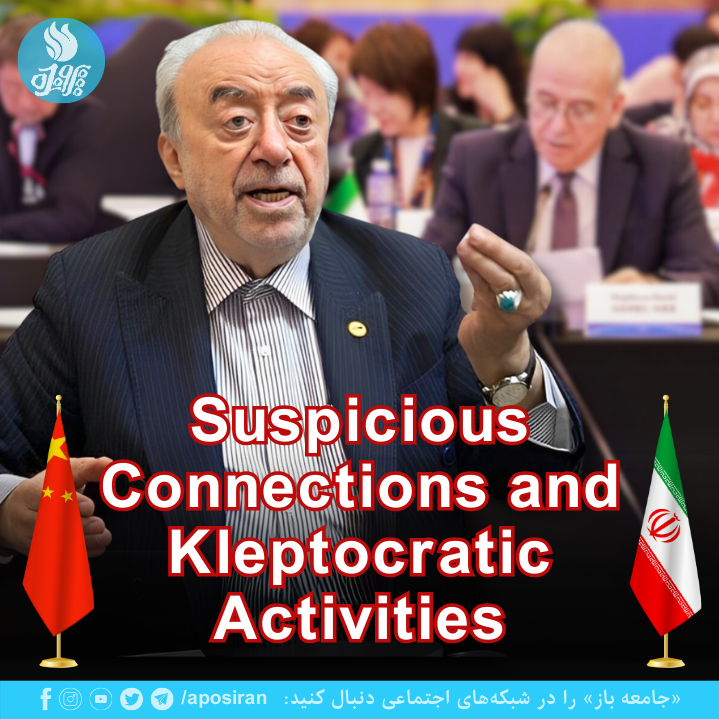
The case of Kheirollah Khademi, a long-time deputy minister in the Iranian government, clearly illustrates how having ties to the IRGC can guarantee one’s professional survival in the chaotic and unpredictable political landscape of Iran. His many years of service as a deputy minister, specializing in transportation and urban planning, have allowed him to establish extensive connections with various institutions, including the IRGC.
His long-held position as CEO of Iran’s Construction and Development of Transportation Infrastructures Company (CDTIC), the most important subsidiary of the Ministry of Roads and Urban Development, underscores his secure and stable role in the ministry despite the extent and momentum of political changes in the country.
Iranian state media have repeatedly presented Khademi as a “warrior during Iran’s war with Iraq” and an “official member of the Islamic Revolutionary Guard Corps.” But who is this influential figure, and how has he managed to climb the professional ladder within the Iranian government?
Kheirollah Khademi, the Perpetually Present Manager
Born in 1965 in southwestern Iran, Khademi obtained a Ph.D. in civil engineering from Chamran University, Ahvaz, when he was 47. He worked his way to his first national executive position in 2011 during the presidency of Mahmoud Ahmadinejad. Khademi joined CDTIC, initially as a board member, and has served as the company’s CEO for the past seven years.
This promotion also paved the way for his appointment as Deputy Minister of Roads and Urban Development. With connections to high-ranking military figures and institutions – an invaluable advantage in Iran’s political landscape, Khademi has been considered in recent years as a candidate for various senior positions within the government, including Minister of Roads and Urban Development.
Despite promotions and promises of further advancement for Khademi, reports have highlighted unfavorable economic conditions at CDTIC. Most notably, on December 19, 2019, Khademi admitted that the company had accumulated debts amounting to nearly 25 trillion rials.
It is worth noting that any changes in management at CDTIC require presidential approval. Reluctant to confront the IRGC, no Iranian president has so far dared to replace Khademi despite reports of administrative and financial shortcomings. Khademi also maintains strong connections with members of the Iranian Parliament (Majlis). Many of these members, who won the election and took office with pledges to construct and repair both urban and rural roads, rely on close relationships with CDTIC to fulfill their commitments.
Inviolable Connections to the IRGC
Over the past years, Khademi has consistently expressed his homage to the IRGC and ensured it receives its share of the lucrative contracts offered by CDTIC. There are numerous indications of Khademi’s close cooperation with the IRGC, particularly with “Khatam al-Anbiya Construction Headquarters.”
In 2021, Khademi played a key role in the Karkheh Reservoir Dam project, where the construction contract was awarded to a company affiliated with Khatam al-Anbiya and the IRGC. In September 2022, he announced that the contractual issues related to a railway project in Lorestan Province were resolved with the assistance of Khatam al-Anbiya Headquarters.
Khademi, a trusted asset of the Islamic Republic
Khademi’s resilience in power and his backing by influential circles indicate that he holds significant trust within the Islamic Republic’s system, particularly among the higher echelons of the IRGC. This trust is notably extended to him by Ali Khamenei, the Supreme Leader, and his appointees, highlighting his prominent role as an executive manager.
A glance at Khademi’s managerial background reveals that his role within the Islamic Republic extends far beyond that of a deputy minister. His strong connections with the IRGC and the trust placed in him by Khamenei have often enabled him to speak on and make decisions regarding matters typically reserved for the Minister of Roads and Urban Development.
Further details on these findings can be found here:
#OpenSociety