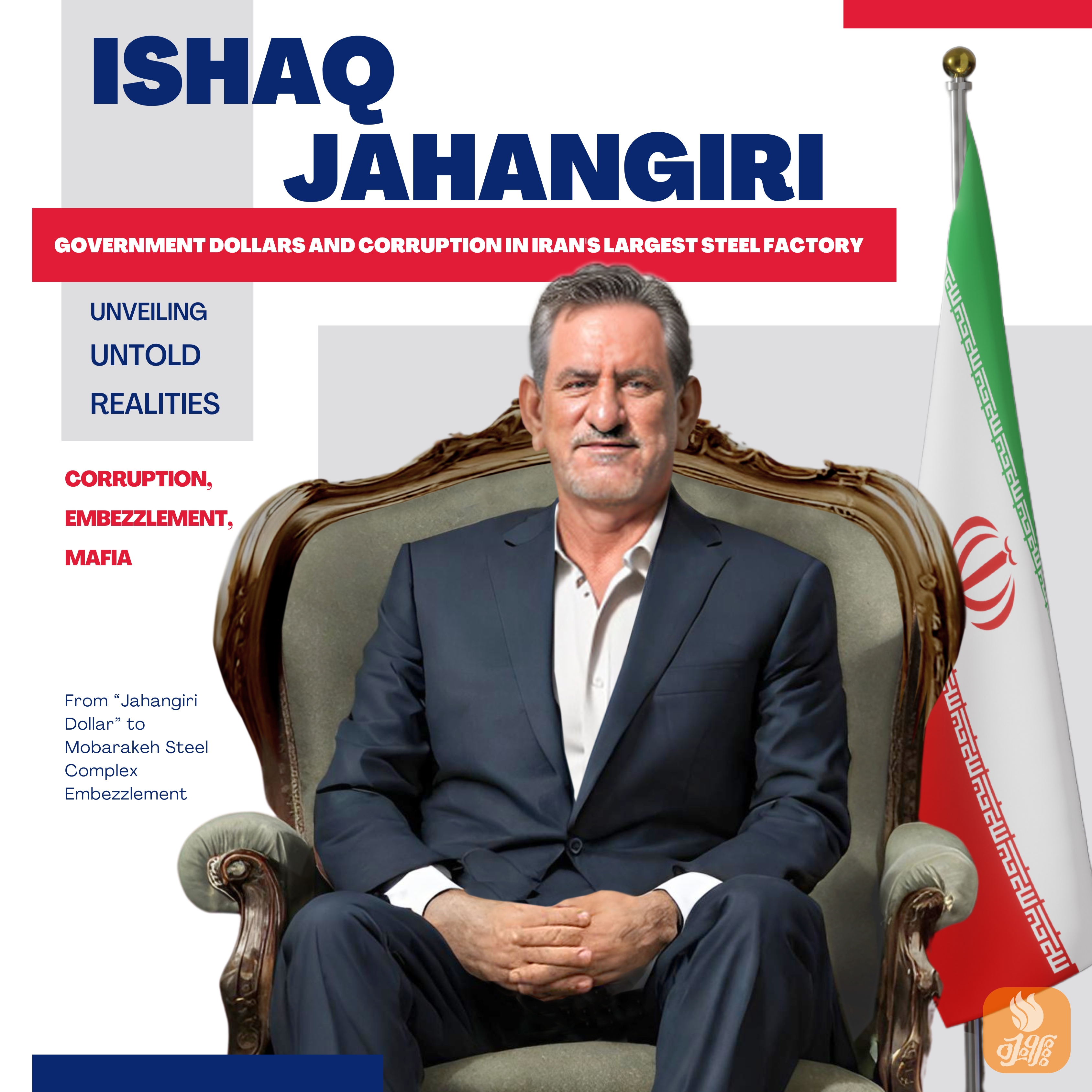
Ishaq Jahangiri, Government Dollars and Corruption in Iran’s Largest Steel Factory
Ishaq Jahangiri has been in various corruption cases in the Islamic Republic. Two examples include “Jahangiri Dollar” and Mobarakeh Steel Complex (MSC) case.
The Jahangiri Dollar case involves $66 billion allocated in 4,200 toman units by the Iranian regime’ from 2015-2021 to lower commodity prices. Ishaq Jahangiri, a major supporter of this idea, earned the media nickname “Jahangiri Dollar.” This issue contributed to economic corruption.
The root of corruption was that the government provided some importers with dollars at a low and unrealistic price in a non-transparent manner. The price of the dollar, which became known as “Jahangiri dollars,” generated widespread rent-seeking in Iran. While the entire Iranian economy was facing increasing sanctions, Jahangiri dollars led to the creation of a rentier class benefiting from political power. Most of the companies that benefited from this rent were closely linked to the Islamic Revolutionary Guard Corps, and this drove private companies, independent traders, and non-governmental importers to ruin and decline.
The Mobarakeh Steel Complex in Esfahan stands as Iran’s largest steel production facility and one of the country’s most profitable enterprises. In August 2022, an investigative report exposed widespread corruption of officials including Ishaq Jahangiri in the MSC. The report detailed a staggering 90 instances of “violations, deviations, and imposition of damages,” revealing an estimated misappropriation of over 91,800 billion tomans in less than three years.The violations committed against the MSC encompass not only embezzlement and the misallocation of funds but also the provision of gifts and support to state institutions such as the intelligence service, Islamic Revolutionary Guard Corps (IRGC) and political figures.
These instances illustrate Ishaq Jahangiri’s status within the economic and political framework of the Islamic republic, indicating that despite allegations of corruption, he remains shielded from legal action.
To read the first article click here.
Further details on these findings can be found here: